FROM DARKNESS TO LIGHT
Introduction
This companion essay grew out of more than twenty-five years devoted to setting the poems of Jiddu Krishnamurti to music.
During this long creative journey, it gradually became clear that the poems reveal not only a remarkable body of poetic writing, but also the profound evolution of Krishnamurti's thought during the decisive years 1923–1931.
To help listeners and readers follow this inner journey, each poem set to music in From Darkness to Light is accompanied by an About this Track note, presenting its historical background, first publication, and philosophical context.
The purpose of this essay is to bring these individual observations together into a single chronological narrative, offering a broader view of the transformation that culminated in Krishnamurti's later teaching.
It is offered as a companion to the musical work, with the hope that music, poetry, and historical context may together illuminate the remarkable evolution of Krishnamurti's thought.
George Stefanakis
Athens, Greece
2026
Preface
This companion essay came into being naturally during the process of setting Jiddu Krishnamurti's poems to music.
As I researched the history of each poem—when it was written, when it was first published, and the period of Krishnamurti's life to which it belonged—it gradually became clear that the poems themselves reveal the evolution of his thought.
What began as historical research in support of the musical project slowly developed into a study of Krishnamurti's inner journey as reflected in his own poetic writings.
In this way, the musical project gradually opened the possibility of reading Krishnamurti's poems as a continuous record of the evolution of his thought.
This essay does not seek to interpret the poems. Rather, its purpose is to provide the historical and philosophical context in which they may be read and heard as parts of a single inner journey.
It is offered in the hope that these pages may serve as a quiet companion to the music and help illuminate the remarkable evolution of Krishnamurti's thought.
George Stefanakis
Athens, 2026
The Evolution of Jiddu Krishnamurti's Thought Through His Poems
George Stefanakis
I consider the years 1923–1931 to be of particular importance for anyone wishing to gain a deeper understanding of Jiddu Krishnamurti's work. It was during this period that the gradual evolution of his thought took place—an evolution that would later find its fullest expression in his talks and writings.
It has now been twenty-five years since I began setting Krishnamurti's poems to music, with the generous permission of the Krishnamurti Foundation of America and the Krishnamurti Foundation Trust.
Throughout this long journey, I gradually came to understand why many readers find his early poems difficult to approach. Their language, symbolism, and, above all, the evolution of his thought cannot easily be appreciated when the poems are read individually or outside their historical context.
For this reason, I decided to research when each poem was written, when it was first published, and the period of Krishnamurti's life to which it belonged.
I then included this information in each "About this Track", together with a brief presentation of its philosophical content.
In this way, the gradual development of Krishnamurti's thought during the decisive years 1923–1931 becomes clearly visible.
The more I studied the poems in chronological order, the more convinced I became that the title From Darkness to Light can hardly be accidental. It is far more than a beautiful poetic title; it seems to describe the very inner journey revealed through the poems themselves.
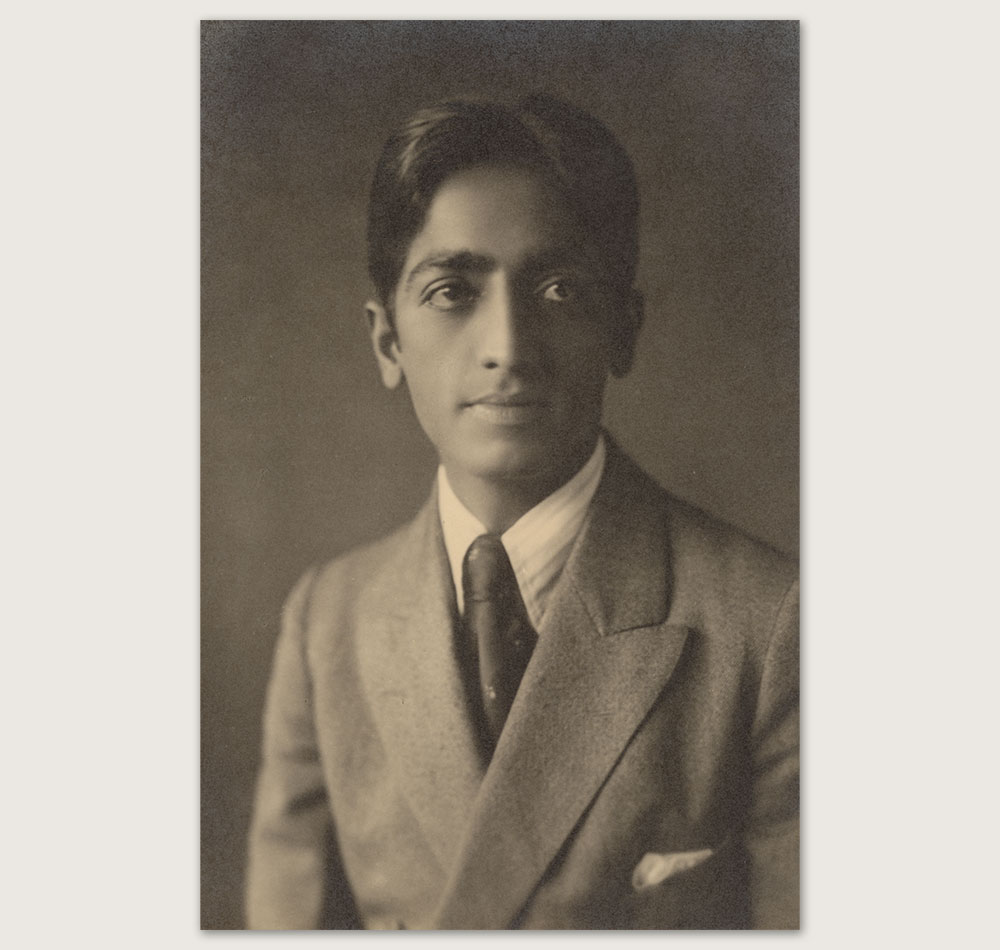
During the early years (1923–1925), the language is dominated by devotion, prayer, the Beloved, and mystical union.
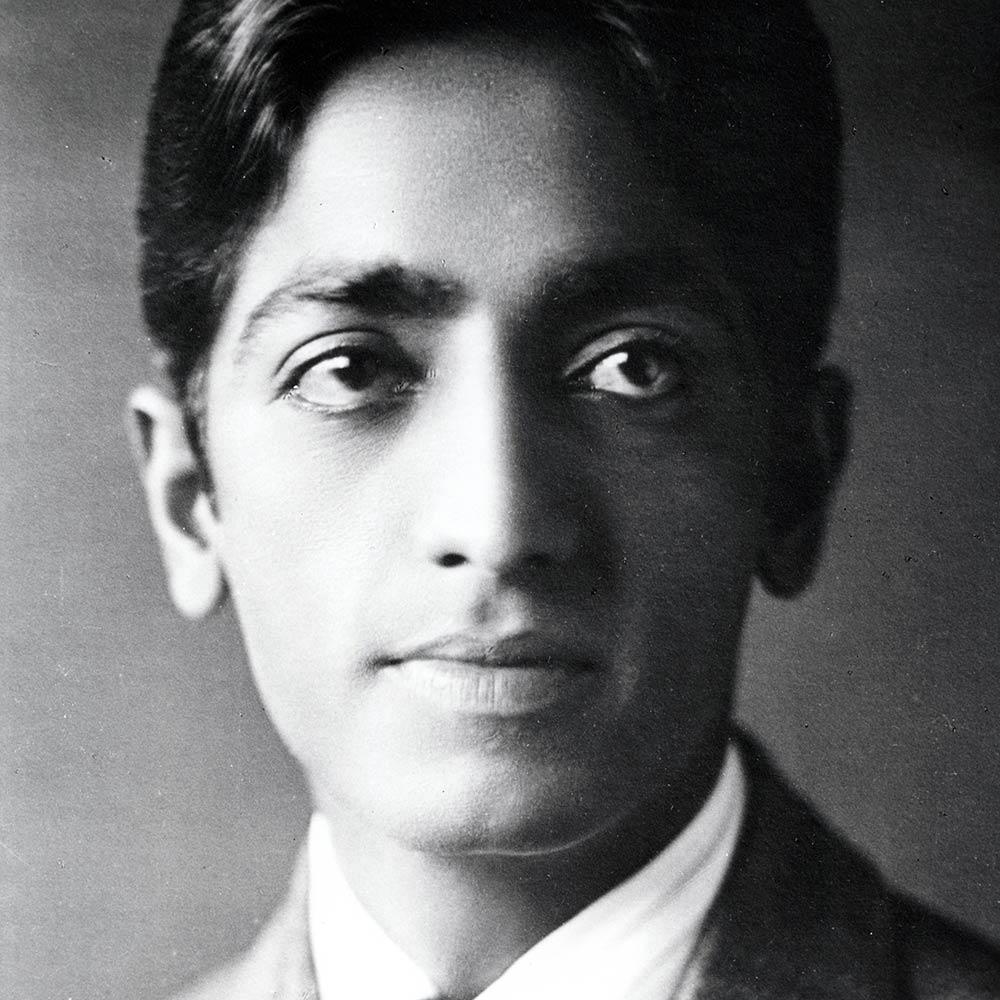
Between 1926 and 1928, a profound inner transformation begins to emerge.
The Beloved gradually ceases to represent a personal figure and increasingly becomes a symbol of Life, Truth, and Freedom.
Jiddu Krishnamurti, 1926
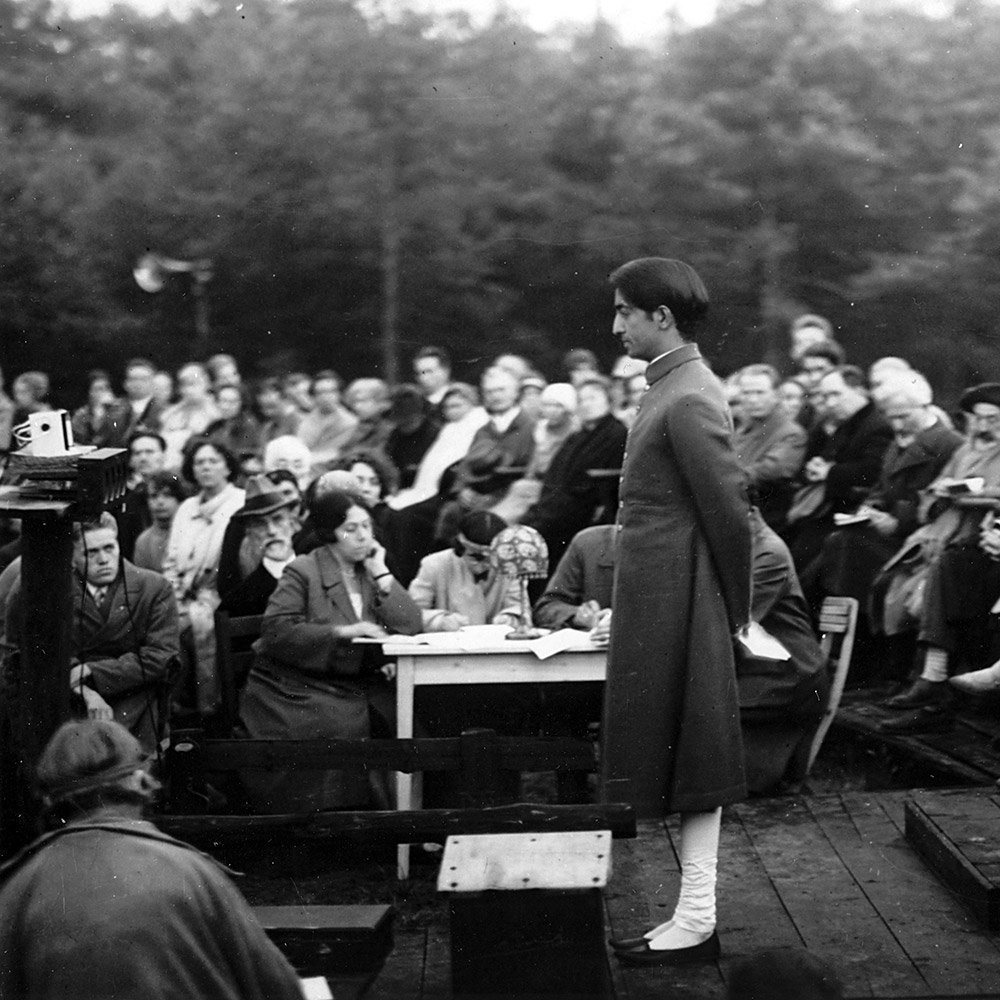
In 1929, following the dissolution of the Order of the Star, Krishnamurti's vocabulary changes noticeably. Concepts such as freedom, direct perception, authority, belief, and self-understanding move to the centre of his thought.
By 1930–1931, the transition is essentially complete. The poetic language remains, yet the philosophical vision has become the same one that would characterize his teaching throughout the following fifty years.
Seen in this light, From Darkness to Light may be understood in many ways: as a journey from dependence to freedom, from seeking to understanding, from symbol to direct perception, and from authority to personal discovery.
From my own study, I have come to feel that very few thinkers have spoken about the search for truth with the same consistency and clarity as Socrates and Jiddu Krishnamurti. Socrates, through the method of inquiry, invited his companions to discover truth for themselves. Krishnamurti, in his own way, tirelessly reminded his audiences that the speaker stood above no one.
Krishnamurti never asks us to follow his thought. Instead, he becomes a mirror in which each person is invited to observe himself or herself. In my view, this is the profoundly revolutionary dimension of his work.
As he writes in the poem The Master Singer of Life: "Be a lamp unto thyself. Thou shalt not then cast a shadow across the face of another."
Perhaps this single sentence expresses the very essence of his philosophy. When human beings are no longer psychologically dependent upon authority, ideology, or the images they have created of themselves, they also cease to impose themselves upon others.
There, in my opinion, lies the deepest form of revolution—a revolution that does not create new conflicts but renders them unnecessary.
It was with this understanding that I undertook the musical setting of Krishnamurti's complete poetic works. My hope is that the music, together with the historical and philosophical notes accompanying each poem, will help listeners follow this remarkable inner journey as it unfolds through his own words.
The journey reflected in these poems may be understood not only as Krishnamurti's own inner journey. Perhaps it also points toward a possibility that exists within every human being: the possibility of moving from dependence to freedom, from seeking to understanding, and from darkness to light. Whether that possibility becomes a living reality is for each person to discover.
Chronological Overview (1923–1931)
1923 — The Beginning
Krishnamurti's early poetic writings are rooted in the language of devotion, the Beloved, and mystical aspiration.
1924 — The Path Deepens
Themes of inward search, prayer, and spiritual longing continue to shape his poetic expression.
1925 — The Search Intensifies
Following the death of his brother Nitya, the poems acquire greater emotional depth and begin to question accepted spiritual certainties.
1926 — The Immortal Friend
The Beloved becomes an increasingly profound symbol, while personal experience begins to outweigh inherited belief.
1927 — Transformation Begins
The language of devotion remains, yet many poems already point toward direct perception, inner freedom, and self-discovery.
1928 — Toward Freedom
A decisive year. The symbolism gradually changes: the Beloved gradually ceases to be a personal figure and increasingly becomes a symbol of Life, Truth, and Freedom.
1929 — Truth is a Pathless Land
After dissolving the Order of the Star, Krishnamurti's vocabulary changes dramatically. Authority, belief, freedom, direct perception, and self-understanding become central themes.
1930 — A New Vision
The transformation is virtually complete. The poetry now expresses the philosophy that would characterize his lifelong teaching.
1931 — The Song of Life
Krishnamurti's final collection of poetry marks the completion of this remarkable inner journey.
From Darkness to Light may be read as the poetic record of the evolution of Krishnamurti's thought—an inner journey from dependence to freedom.